
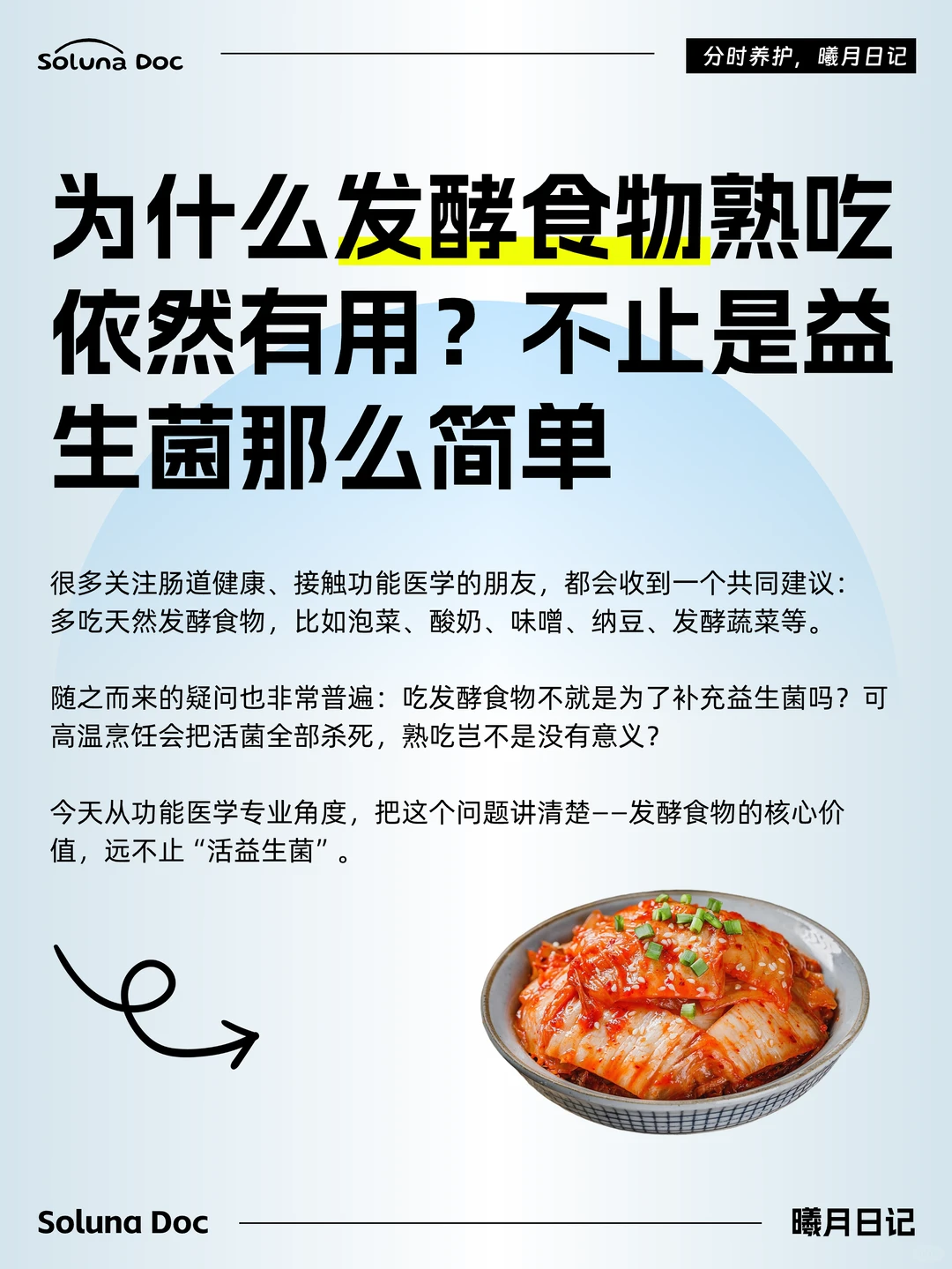
Anyone who cares about gut health has heard the advice: eat more naturally fermented foods — kimchi, yogurt, miso, natto, fermented vegetables and the like. But a fair question follows: isn't the whole point of fermented foods the probiotics? High-heat cooking kills off the live cultures, so isn't eating them cooked pointless? Today we settle the question from a functional-medicine perspective — the core value of fermented foods goes far beyond "live probiotics".
First, One Key Fact
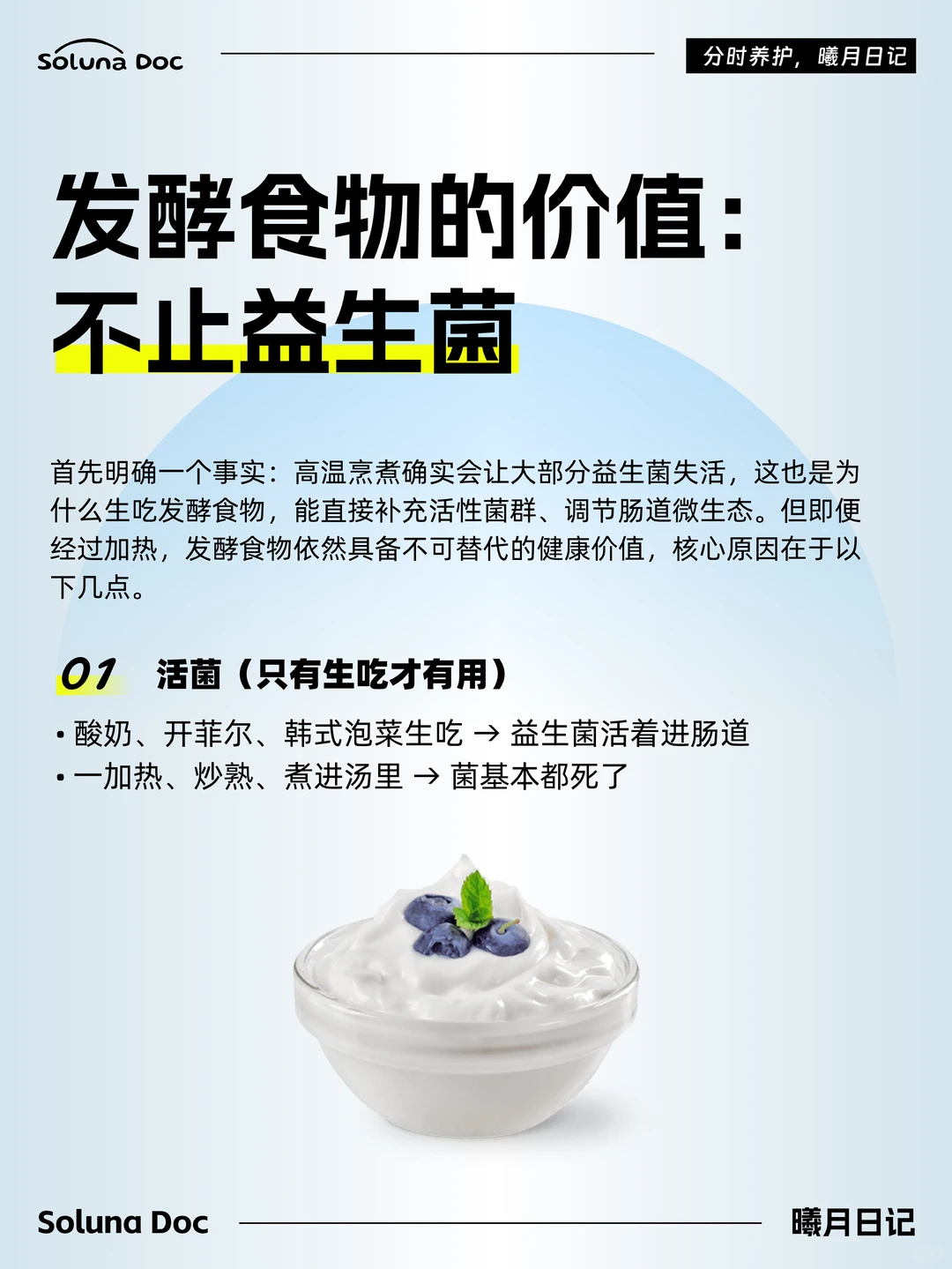
High-heat cooking does inactivate most probiotics. That is exactly why eating fermented foods raw (such as homemade kimchi or unsweetened yogurt) is a direct way to introduce live cultures and support the gut ecosystem. Yet even after heating, fermented foods retain irreplaceable health value [3] — for the following core reasons.
1. Heat-Inactivated "Dead" Bacteria Are Still Biologically Active
Postbiotics are the key reason cooked fermented foods still work [1]. When probiotics are killed by heat, their cell-wall components, metabolites and peptides remain fully intact — and these substances are extremely stable and unaffected by temperature [4].
Postbiotics act directly on the gut lining, helping to balance inflammatory responses, support the gut barrier, modulate immunity and limit less-desirable bacteria. They are even more stable than live cultures and easier for the body to use — especially helpful for people with sensitive digestion or a fragile gut microbiota.
2. Fermentation Upgrades Nutrition — and Heat Doesn't Destroy It
During fermentation, microorganisms deeply break down and transform the raw ingredients, creating entirely new nutrients — most of which are heat-stable [2]:
- Short-chain fatty acids are produced, fueling the cells of the gut lining and strengthening the gut barrier [5]
- B vitamins and vitamin K2 are synthesized, along with other nutrients the body needs
- Large protein and carbohydrate molecules are broken down into small peptides and amino acids, greatly improving digestibility and easing the burden on the gut
- Anti-nutritional factors such as phytic acid and lectins are broken down, reducing gut irritation, gas and intolerance issues
In short, fermentation "upgrades" the food itself. Whether you eat it raw or cooked, these improved nutrients are still there.
3. Fermentation Reshapes Food into Quality Prebiotics
Fermentation alters the structure of the dietary fiber in food, converting it into prebiotics that beneficial gut bacteria can use more easily. Even without any live cultures, fermented foods can nourish your own gut microbiota and support microbial balance [2] — the core advantage that sets fermented foods apart from ordinary ingredients.
💡 A Smarter Way to Eat Fermented Foods
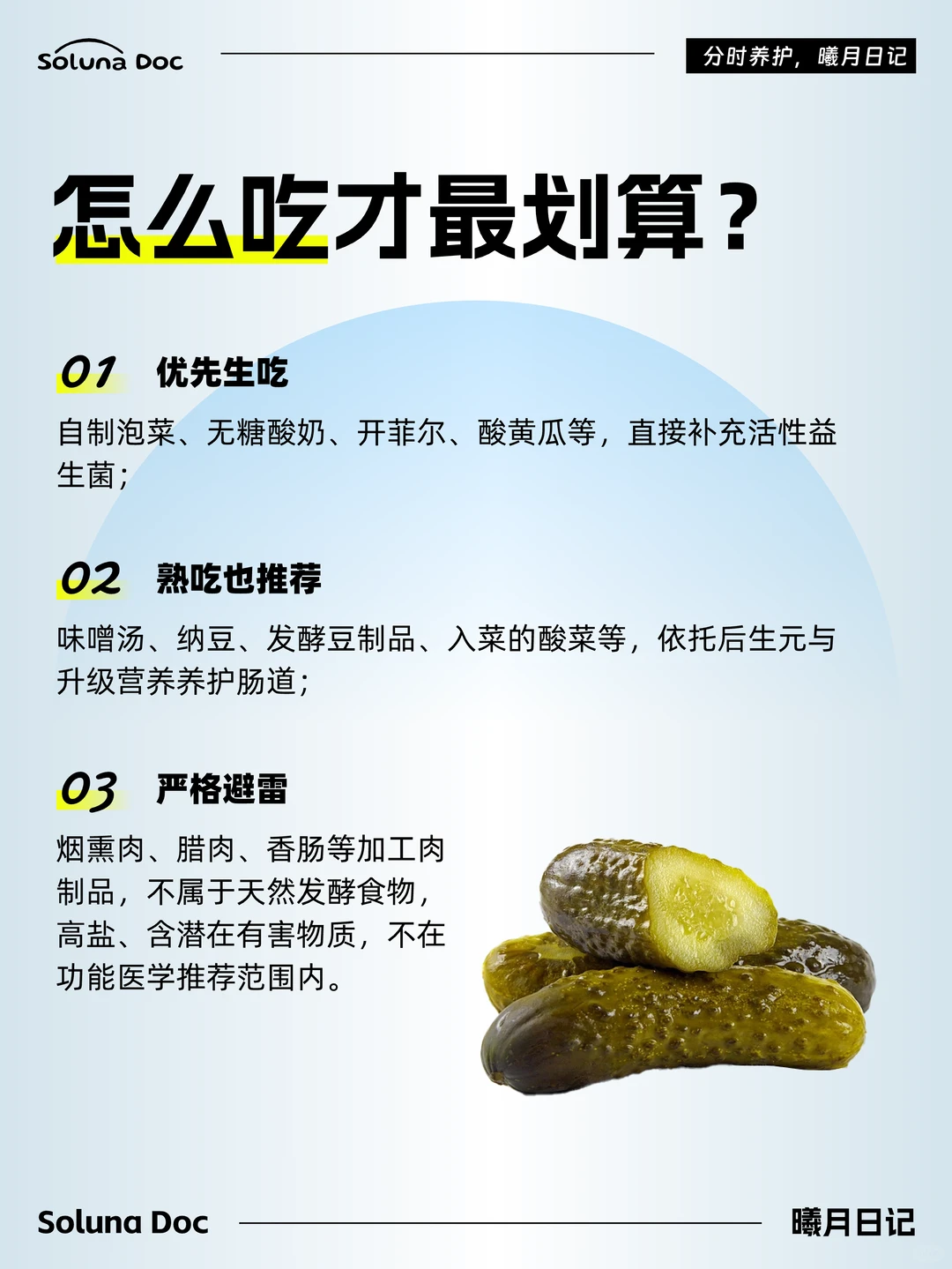
- Raw first: homemade kimchi, unsweetened yogurt, kefir, pickled cucumbers and the like directly supply live probiotics
- Cooked is recommended too: miso soup, natto, fermented soy products, cooked sauerkraut and the like support the gut through postbiotics and upgraded nutrition
- Strictly avoid: smoked meats, cured bacon, sausages and other processed meats — these are not naturally fermented foods; they are high in salt and may contain potentially harmful compounds, so they fall outside functional-medicine recommendations
Frequently Asked Questions About Fermented Foods
Traditionally fermented doughs such as steamed buns and bao are leavened with yeast, but after high-temperature steaming what you mainly get is a soft texture and easier digestion. Their health value comes mostly from the carbohydrates themselves rather than the probiotic or postbiotic benefits typical of fermented foods. To gain the gut-health benefits of fermentation, pair them with foods rich in probiotics or postbiotics, such as kimchi and yogurt.
Fermented bean curd is a fermented soy product, similar to natto and douchi. After being fermented by molds, it contains postbiotic components, including metabolites and enzymes produced during fermentation. Eating it cooked (for example, in dishes) still provides some of its value, but choose low-salt versions and keep portions moderate, as fermented bean curd is usually high in sodium.
Sauerkraut and pickled vegetables are not the same. Sauerkraut is made through natural lactic-acid fermentation, counts as a fermented vegetable, and contains postbiotics and prebiotics that benefit gut health. Traditional pickles, by contrast, are preserved mainly with high salt and are not necessarily fermented by beneficial bacteria. When choosing, be careful to distinguish naturally fermented products from high-salt pickled ones.
Rice wine and sweet fermented rice (jiuniang) are fermented foods made from glutinous rice fermented with a starter culture. They contain fermentation metabolites and some postbiotic components. Note, however, that store-bought jiuniang is usually high in sugar and contains a small amount of alcohol, so children and certain groups should be cautious about eating it.
Shelf-stable yogurt is pasteurized, so the live cultures have been killed and it can be stored at room temperature. Its nutritional value comes mainly from the dairy itself, such as protein and calcium. If you want the benefits of live cultures, choose refrigerated yogurt labeled as containing active probiotic cultures.
Discover the Soluna Doc Postbiotic Drink Mix
14 probiotic strains (including imported patented strains such as LGG and Bb-12) + 3 prebiotics + EpiCor postbiotics — Morning Boost, Evening Calm timed nutrition
View Product Details →References
- Salminen S, et al. "The International Scientific Association of Probiotics and Prebiotics (ISAPP) consensus statement on the definition and scope of postbiotics." Nat Rev Gastroenterol Hepatol. 2021;18(9):649-667.
- Dimidi E, et al. "Fermented Foods: Definitions and Characteristics, Impact on the Gut Microbiota and Effects on Gastrointestinal Health and Disease." Nutrients. 2019;11(8):1806.
- Marco ML, et al. "The International Scientific Association for Probiotics and Prebiotics (ISAPP) consensus statement on fermented foods." Nat Rev Gastroenterol Hepatol. 2021;18(3):196-208.
- Aguilar-Toalá JE, et al. "Postbiotics: An evolving term within the functional foods field." Trends Food Sci Technol. 2018;75:105-114.
- Ratajczak W, et al. "Butyrate in the Gut–Lung Axis: Immunomodulatory Properties." Nutrients. 2019;11(10):2520.